

(Average reading time – 2 minutes)
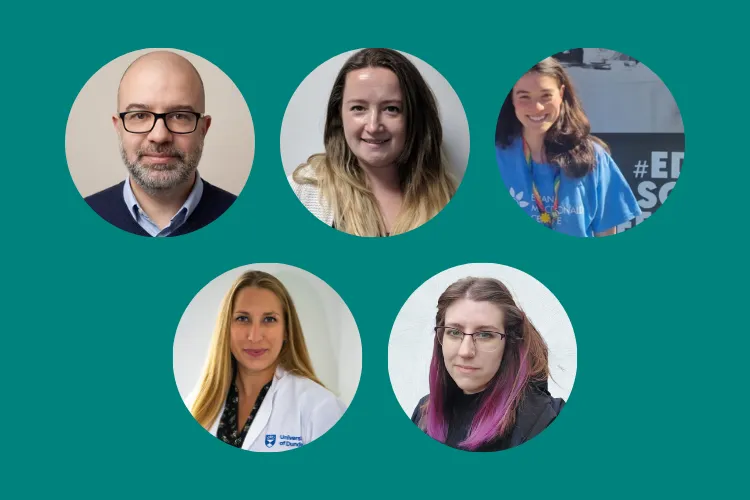
This Postdoctoral Appreciation Week, we’re shining a spotlight on some of the postdoctoral researchers who are part of the Euan MacDonald Centre network. Working across different research groups and disciplines, our postdocs bring expertise, curiosity and fresh ideas, contributing to research that aims to improve understanding, diagnosis and ultimately new treatments to help slow, stop and reverse motor neuron disease.
Introducing
Mario Cecchini 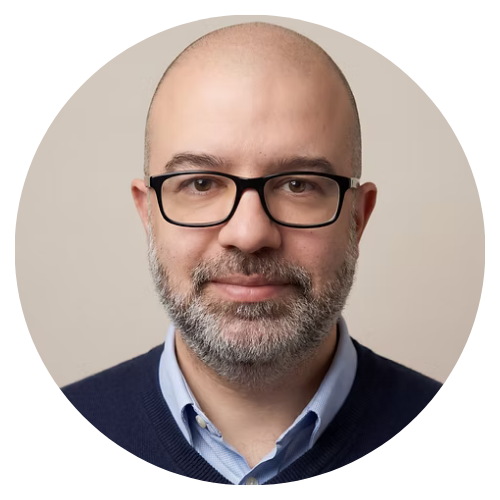
Postdoctoral Research Assistant
Abrahams Lab
Psychology
University of Edinburgh
I am a researcher in psychology with expertise in cognitive and behavioural changes associated with ageing and neurodegenerative conditions. My current work focuses on the relationship between cognitive abilities and decisional capacity in people living with MND, with the aim of improving understanding of autonomy and decision-making in the context of assisted dying.
Helena Chaytow

Senior postdoctoral researcher
Gillingwater Lab
University of Edinburgh
Helena is a senior postdoctoral researcher in the Gillingwater lab with over a decade of experience in the motor neuron disease (MND) field. Specialising in in-vivo research (research done in living organisms), she utilises animal models to investigate the biological mechanisms underlying various motor neuron diseases, with the ultimate goal of developing new therapies.
Beyond her laboratory work, Helena is an active member of the Euan MacDonald Centre, where she champions community building by creating networking opportunities for postdocs to discuss research, navigate career challenges, and explore future collaborations.
Rachel Kline
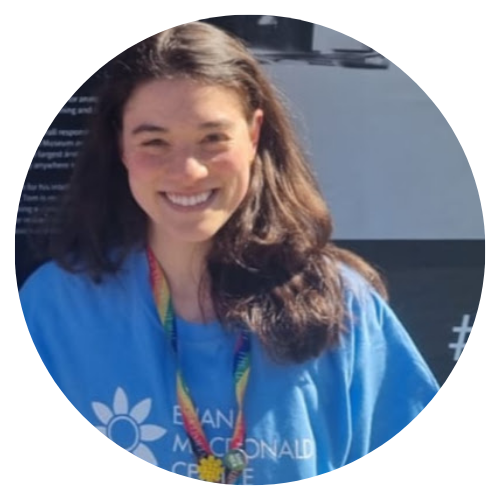
Postdoctoral research assistant
Gillingwater Lab
University of Edinburgh
Rachel Kline conducted her PhD research in Professor Tom Wishart's lab, using comparative proteomic approaches to identify correlates of neuronal vulnerability across neurodegenerative diseases. She then undertook a position as a Proteomics and Metabolomics staff scientist at the Roslin Institute, specialising in data handling for quantitative proteomics pipelines. She has recently transitioned to full-time research in a postdoctoral position in Professor Tom Gillingwater's lab, investigating how the repurposed drug targeting of a convergent molecular pattern first identified in her PhD research may be applicable to the clinic.
When she is not in the lab, Rachel hugely enjoys celebrating Scotland's glorious outdoors by running, hiking and swimming as much as she can through it!
Zsofia Laszlo
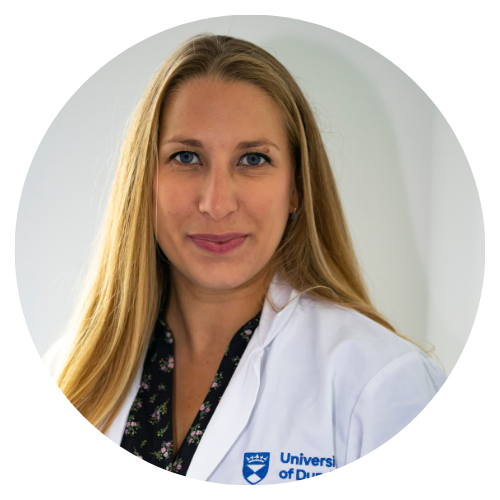
Postdoctoral Research Fellow
MND Association Lady Edith Wolfson Junior Fellow
Henstridge Group, Division of Neuroscience
Faculty of Health, University of Dundee
I am an MND Association Lady Edith Wolfson Junior Fellow investigating the molecular and cellular mechanisms of the initiation and progression of synaptic dysfunction in Amyotrophic Lateral Sclerosis (ALS/MND). I have a particular focus on the role of different glial cells in synapse loss.
My research integrates human post-mortem tissue, experimental animal models and advanced in vitro models, including different human iPSC cell lines, to investigate how pathological changes emerge and progress in ALS. I use quantitative proteomics, neuropathology, high-resolution imaging, real-time in vitro assays along with systems-level bioinformatics to define spatial and temporal disease signatures.
Hannah Smith

Postdoctoral Research Fellow
Gillingwater Lab
University of Edinburgh
Hannah is a postdoc in the Gillingwater lab and has spent most of her research career studying multiple types of motor neuron diseases. Her PhD used zebrafish to investigate how motor neurons grow to their muscle targets and form connections, and she is currently finalising a postdoc project examining how proteins are made differently in healthy vs diseased motor neurons.
Outside of the lab, Hannah is extremely passionate about communicating her research to the public, especially those living with MND. She has volunteered at multiple public engagement events, presented her work at the "Tribute to Euan MacDonald” event in 2025, and hosted visitors at laboratory tours. Hannah deeply believes that the better we all understand the science behind motor neurons, the closer we are to developing effective new treatments.
Further links
Meet more of our postdoctoral researchers
Find out more about the Euan MacDonald Centre
Explore the different types of research we do
Your donation helps researchers investigate the causes of MND, develop potential treatments, and train the next generation of MND researchers: Help make research like this possible
Images with kind permission of Mario Cecchini, Helena Chaytow, Rachel Kline, Zsofia Laszlo, and Hannah Smith